Professional networking that works isn’t about collecting contacts — it’s about building genuine, long-term relationships by leading with value, asking better questions, following up within 48 hours, and showing up consistently in the right communities rather than chasing quantity.
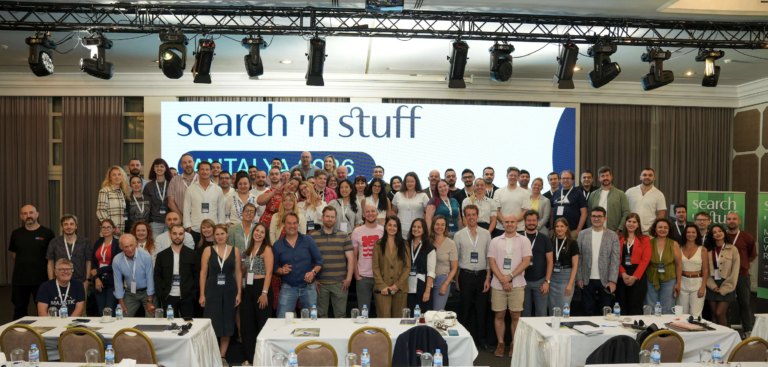
I’ve spent the last few years organising the rooms this guide describes — small networking dinners in London, meetups and quick-fire talks, and a conference in my hometown of Antalya. So I’m not writing from theory. I’m writing from watching connections turn into partnerships, mentorships, and friendships that genuinely changed people’s careers. This is a practical guide, not a pep talk: what networking actually is, why it works, a simple system you can run weekly, how to start strong at an event, and how to build a personal brand that lasts. If networking has ever felt awkward or “salesy” to you, that’s the version we’re going to drop.
What professional networking really is (and the myth to drop)
Professional networking is the practice of building genuine, long-term relationships with the people in and around your field — not collecting business cards or firing off LinkedIn requests the morning after an event. The myth worth dropping is that networking is transactional: meet the right person, get the right client, move on. That version feels draining because it is draining. It treats people as stepping stones.
The networking that actually compounds works the other way around. Instead of asking “How can this person help me right now?” it starts with “What’s their journey, and how can I support it?” Ironically, the less you chase immediate outcomes, the stronger your network becomes — because people don’t remember who handed out the most cards. They remember who genuinely showed up.
The reframe I keep coming back to: networking is transformation, not transaction. And the unit that matters isn’t your contact count — it’s your community. Community beats contacts every time, because a contact is a name in a CRM and a community is a group of people who think of you when an opportunity appears. I wrote more about that shift in the real power of business networking, but if you want one professional networking tip to anchor everything else, make it be useful first, and play the long game.
Why networking works — the returns most people miss
If that all sounds a little warm and fuzzy, let’s talk results — because networking isn’t just good vibes, it’s good business. The returns are real; they’re just rarely the ones people expect when they walk into a room hoping for a lead.
Opportunities you can’t Google
Some of the best opportunities are never posted online. They’re mentioned over coffee, raised at a dinner, or floated in a group chat weeks before they become a job ad or a tender. Networking puts you in the room where those conversations happen — which means the work, the collaborations, and the introductions reach you before they reach the open market. You can’t search for what was never published. You can only be close enough to hear it.
Trust beats cold outreach
You can write the sharpest cold email in the world and still lose to a warm introduction. People hire, partner with, and refer the person who comes recommended by someone they already trust. That’s not unfair — it’s just how humans de-risk decisions. I’m endlessly grateful to the people who introduced me to new connections early on and championed Search ‘n Stuff when it was barely an idea; none of that came from a pitch. It came from relationships built before there was anything to ask for.
Staying ahead of the curve
In fast-moving fields — SEO, performance marketing, AI in search — the first place you hear about a shift usually isn’t a blog post. It’s a peer in the trenches telling you what they’re seeing this week. A strong network is an early-warning system: it keeps you plugged into the unfiltered version of what’s changing, often months before it’s written up anywhere. For a consultant or founder, that’s the difference between reacting and being ready.
Build a networking system, not random interactions
Most people network reactively — they show up to an event when they’re job-hunting or chasing clients, then go quiet for six months. That’s why it feels like it doesn’t work. The fix is to treat networking like any other part of your business: as a light, repeatable system rather than a series of random interactions.
Start by mapping your people. Pick 25 to 50 people you genuinely want a relationship with and sort them into four buckets:
- Clients — people you currently work with or could work with directly.
- Referral partners — people who serve the same audience you do but don’t compete (a designer to your copywriter, an accountant to your consultant).
- Peers — people doing roughly what you do, who keep you sharp and trade notes.
- Mentors — people a few steps ahead who you learn from (and who you’ll one day reciprocate for).
Once you can see your network on one page, two things become obvious: who you’ve neglected, and where the gaps are. Tracking these relationships like a business asset — a simple spreadsheet is plenty — is one of the most underrated networking tips going, because it turns “I should stay in touch” into something you actually do.
Next, get your positioning straight. When someone asks what you do, a vague answer is a missed connection. Use a simple structure:
“I help [audience] achieve [outcome] by [method].”
For example: “I help B2B SaaS teams grow organic traffic by building content systems around search intent.” It’s specific enough that the other person immediately knows who to introduce you to — and being easy to refer is half the game.
Then run a simple weekly networking routine so none of this depends on motivation:
- Reconnect with one person you’ve lost touch with — a genuine message, not a pitch.
- Add value to two people — share a relevant article, make an introduction, or comment thoughtfully on something they posted.
- Have one real conversation — a call, a coffee, or a proper exchange at an event.
- Follow up on anything outstanding within 48 hours, while it’s still warm.
Four small actions a week. That’s it. The point of a system isn’t volume — it’s consistency, because relationships are built in years, not weeks, and a light weekly cadence beats an occasional marathon every time.
How to Start Strong at a Networking Event: Conversation Starters That Actually Work
Walking into a room full of strangers is the part most people dread, so let’s make it concrete. The goal at any event isn’t to “work the room” — it’s to have a handful of real conversations you’ll remember. Here are the tips for networking events that I’d actually give a friend.
Prepare a little before you arrive. Know one or two things you’re curious about and one thing you can offer. If there’s an attendee or speaker list, pick two or three people you’d genuinely like to meet. Then arrive early — it sounds backwards, but a half-full room is far easier to enter than a packed one, and early arrivals are usually the friendliest people there.
Retire “What do you do?” It’s the default, and it gets a default answer. Better questions open people up and make you memorable:
- “What brought you to this event?”
- “What are you working on at the moment that you’re actually excited about?”
- “What’s been the most interesting thing you’ve learned this year?”
- “Who’s someone here you’ve been hoping to meet?”
- “What’s a problem you’re trying to crack right now?”
- “How did you get into this line of work?”
Notice the pattern: they invite a story, not a job title. And when someone shares a challenge, resist the urge to pitch. Just be helpful — that’s how you become the person they remember.
You also need a graceful exit, because lingering too long helps no one. A clean close keeps things warm: “It’s been really good talking to you — I’d love to stay in touch, can I find you on LinkedIn?” or “I’m going to grab a coffee, but let’s continue this — are you around tomorrow?” No awkwardness, no ghosting mid-sentence.
Finally, follow up within 48 hours. This is where most networking quietly dies. Send a short, specific message: reference something you actually talked about, and offer something — an article, an introduction, an answer to the problem they mentioned. “Great meeting you” is forgettable. “Loved our chat about international SEO — here’s that case study I mentioned, and I think you’d get on well with [name], happy to introduce you” is the message that starts a relationship.
If the idea of practising any of this makes you wince, that’s exactly why I started with smaller formats. Search ‘n Stuff meetups and our networking dinners are deliberately low-ego, welcoming rooms — long tables, shared food, honest conversation, no forced pitches. They’re a much kinder place to find your feet than a cavernous conference hall, and they’re where a lot of these openers were first tested.
How to Build a Personal Brand Through Strategic Networking
Your personal brand isn’t a logo or a colour palette — it’s what people say about you when you’re not in the room. Strategic networking is how you shape that, deliberately and authentically, over time. Here’s how the pieces fit together.
1. Define your brand. Get clear on what you want to be known for, then say it plainly. A personal brand statement is just your positioning made human: “I’m the person who makes technical SEO make sense to founders,” or “I help early-stage teams turn data into decisions.” If you can’t articulate it, neither can the people who’d otherwise recommend you.
2. Identify your strategic networks. You don’t need to be everywhere. Pick the few communities where your ideal clients, partners, and peers actually gather — niche conferences, founder groups, professional associations, curated communities — and go deep rather than wide. One room you show up to repeatedly will do more for your brand than ten you visit once.
3. Build relationships, not just contacts. This is the throughline of everything here. A thousand connections who don’t know you are worth less than fifty people who’d vouch for you. Depth is the asset.
4. Share your expertise. Visibility compounds a brand. Post what you’re learning, write the occasional article, speak on a panel, or simply contribute generously in conversations. You don’t need to be loud — consistent and useful beats loud every time. Speaking is one of the fastest ways to build authority, which is part of why we run a Speakers Hub: putting your thinking in front of a room is networking and brand-building in a single move.
5. Leverage social proof. Let other people’s words do some of the work. Share a kind note from a client, celebrate a collaborator’s win, or point to results you’ve helped create. Borrowed credibility is still credibility — and it’s far more persuasive than self-description.
6. Be the bridge. The most respected people in any network are the connectors — the ones who make introductions without being asked and expect nothing back. Being known as “the person who introduced me to exactly the right contact” is one of the strongest brand positions there is. Generosity is a strategy, not just a virtue.
7. Stay authentic. People remember how you make them feel far longer than they remember what you said. You can’t fake your way to a durable brand, and you don’t need to. Be consistent, be genuinely interested, and let your reputation be an honest reflection of how you actually work.
If you want a gentle cadence to build this, think in 30/60/90: in the first 30 days, define your statement and map your strategic networks; over 60 days, start showing up consistently and sharing something useful each week; by 90 days, you’re making introductions, contributing in panels or posts, and your network is beginning to describe you the way you’d describe yourself. It’s not fast, but it’s real — and real is what lasts.
Where to network: in person still beats the feed
Online makes networking easier to maintain — but it rarely beats a real room for building trust. Niche communities outperform generic events almost every time, because shared context does half the work before you’ve said a word. A room full of people who care about the same craft you do is worth more than a hall full of strangers swapping cards.
What does a good room feel like? Low-ego and welcoming. People are curious rather than performing, there’s space for beginners and seasoned operators alike, and nobody’s trying to “win” the conversation. That’s the atmosphere we’ve worked hardest to protect across everything we run — from city meetups and networking dinners to the bigger stages.
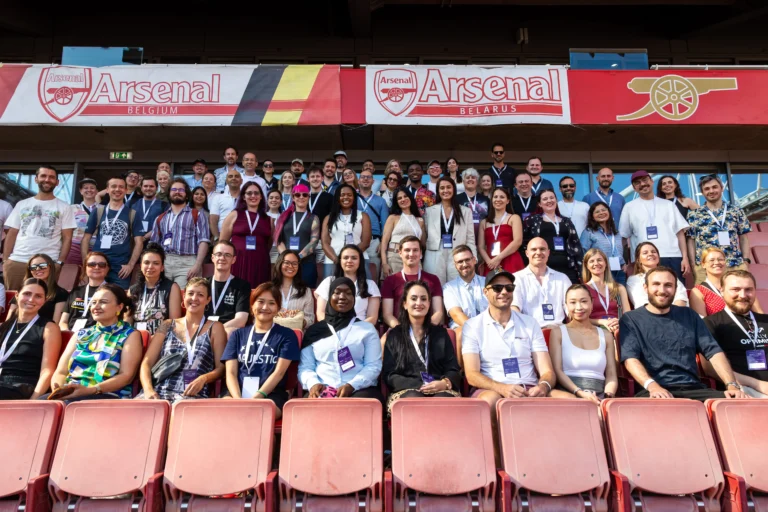
If you want to feel the difference at scale, our two flagship rooms in 2026 are built for exactly this: the Search ‘n Stuff London Conference 2026 at Emirates Stadium on 26 June, and the four-day Antalya Conference 2026 from 1–4 October. Both are designed so the networking is the point and the talks are the catalyst — with formats (panels, workshops, dinners, sunset conversations) that suit different energies, including the more introverted among us who do their best connecting one-to-one rather than across a crowd.
Common networking mistakes to avoid
Most networking that “doesn’t work” fails for a small handful of predictable reasons. Avoid these and you’re already ahead of most of the room:
- Pitching first. Leading with what you sell signals you see people as targets. Lead with curiosity and usefulness instead.
- Chasing quantity. Forty shallow contacts won’t outperform five real relationships. Quality over quantity, always.
- Skipping the follow-up. The conversation isn’t the connection — the follow-up is. No follow-up, no relationship.
- Transactional energy. People can feel when you’re only there to extract something. It quietly repels exactly the people you want.
- Only networking when you need something. If your network only hears from you when you’re job-hunting or pitching, you’ve left it too late. Tend it consistently, especially when you don’t need anything.
Frequently asked questions
What are the best networking tips? Lead with value instead of a pitch, ask better questions than “What do you do?”, follow up within 48 hours, focus on quality over quantity, and think in years rather than weeks. The single most useful habit is being genuinely helpful first — relationships built that way compound far longer than transactional ones.
How do consultants and freelancers network effectively? Start with a clear positioning statement (“I help [audience] achieve [outcome] by [method]”) so you’re easy to refer. Build referral relationships intentionally with non-competing peers who serve your audience, and go deep in a few niche communities rather than spreading yourself thin across generic events.
What are good conversation starters at a networking event? Try “What brought you here?”, “What are you working on that you’re excited about?”, or “What’s the most interesting thing you’ve learned this year?” These invite a story rather than a job title, which makes the conversation memorable — and makes you the person worth following up with.
How do I network if I find it awkward or “salesy”? Reframe the goal: you’re not selling, you’re being useful. Aim for two or three real conversations rather than working the whole room, and lead with a question or an offer. Smaller, low-ego formats like meetups and dinners are far easier places to start than large halls.
How do you build a personal brand through networking? Define what you want to be known for, share your expertise consistently (posts, panels, generous conversations), lean on social proof, and be the person who makes introductions. Above all, stay authentic — people remember how you make them feel, and that’s what a durable brand is built on.
How soon should I follow up after meeting someone? Within 48 hours, while the conversation is still fresh for both of you. Reference something specific you discussed, and offer something concrete — a resource, an introduction, or an answer to a problem they raised. A specific follow-up starts a relationship; a generic “nice to meet you” doesn’t.
Are in-person networking events still worth it in 2026? Yes. Tools make it easier to maintain connections, but trust and serendipity still happen fastest in a real room — the offhand introduction, the opportunity mentioned before it’s public. In-person formats like meetups and conferences remain the highest-signal way to build relationships that last.
How often should I network? A light weekly cadence beats occasional marathons. Reconnect with one person, add value to two, have one real conversation, and clear your follow-ups each week. Four small actions are sustainable, and consistency is what turns a contact list into a community.
Come and practise it in person
Networking that works isn’t a personality trait you’re born with — it’s a set of small, repeatable habits: be useful first, ask better questions, follow up quickly, show up consistently, and build a brand that honestly reflects how you work. The fastest way to get comfortable with all of it is to do it somewhere welcoming.
That’s exactly what we’ve built Search ‘n Stuff to be. Come and practise it in person — at a meetup or one of our networking dinners, at the London Conference on 26 June, or across four days in Antalya this October. Whether you’re an SEO strategist, a performance specialist, a freelancer, or a founder figuring out your next move, there’s a seat at the table for you — and a community that grows with you.