Networking with intention means focusing on the depth and quality of each connection rather than the number of contacts you collect — leading with value, following up within 48 hours, and nurturing relationships over time so every connection has the chance to matter.
Most of us don’t have a networking problem — we have a follow-through problem. We go to the events, have the conversations, swap the LinkedIn handles, and then the connection quietly evaporates because nothing happened next. If you’ve ever come home from a good event with a phone full of names you never spoke to again, this post is for you. It isn’t a beginner’s guide to how to network — we’ve written that broad guide separately. This is something narrower and, honestly, more useful: how to make the connections you already make actually count. The whole thing rests on a belief that runs through everything we do at Search ‘n Stuff — that networking isn’t a transaction, it’s a transformation, and community will always beat a contact list.
What “networking with intention” actually means
Networking with intention is the practice of deliberately building fewer, deeper, mutually valuable relationships — rather than collecting contacts and hoping some of them pay off. The intention sits in how you show up: you lead with value instead of a pitch, you follow up while the conversation is still warm, and you stay in touch long after there’s anything to ask for. It’s the difference between treating a room as a lead list and treating it as the start of relationships you’ll tend for years.
The opposite — and the default — is transactional networking. It’s not malicious; it’s just shallow. You meet someone, mentally file them under “useful / not useful,” and move on. It feels productive because you’re covering ground, but it rarely builds anything, because people can tell when they’re being processed. The reframe that changes everything: you’re not there to extract, you’re there to connect. Once that clicks, the tactics below stop feeling like chores.
Here’s the contrast, side by side:
| The transactional version | Networking with intention |
|---|---|
| “How can this person help me?” | “What’s their journey, and how can I help?” |
| Collect as many contacts as possible | Build a handful of real relationships |
| Pitch what you do | Lead with something useful first |
| Follow up only if there’s an obvious deal | Follow up within 48 hours, every time |
| Go quiet until you need something | Stay in touch when you need nothing at all |
| A name saved in a CRM | A person who thinks of you when an opportunity appears |
None of this is about being saintly. It’s about being effective. The intentional column simply works better — it’s just slower-burning, which is exactly why most people skip it.
Quality over quantity — why a few real connections beat a stack of cards
Ask someone how their networking is going and they’ll often answer with a number: how many events, how many new contacts, how many followers. But the number that actually moves your career isn’t how many people you’ve met — it’s how many would genuinely vouch for you. Those two are almost never the same.
This is the belief we’d defend hardest: community beats contacts. A contact is a name you recognise. A community is a group of people who think of you unprompted — who mention you in a conversation you’re not in, forward you the opportunity before it’s public, or reply within the hour when you finally do ask. You don’t build that by meeting more people. You build it by going deeper with fewer.
There’s a freeing logic here, especially if big rooms drain you. You don’t need to “work” a 300-person conference; three real conversations you actually follow up on will do more than thirty cards in a drawer. Depth is the asset, and depth is built one relationship at a time, not harvested at scale. (If crowds genuinely aren’t your thing, we wrote a whole piece on networking as an introvert — slug to confirm — because the quiet, one-to-one approach is often the more intentional one anyway.)
How to make every connection count: a simple system
Intention without a system tends to stay a nice idea. So here’s the repeatable version — six steps that turn a chance meeting into a relationship that lasts. Run them and you’ll quietly outperform most of the room, not because you met more people, but because you actually showed up for the ones you did.
Keep each step small. The aim isn’t to add another job to your week; it’s to do a few things deliberately rather than many things accidentally.
Lead with value, not a pitch. Before you tell anyone what you do, find something you can give — a useful resource, a relevant introduction, an honest answer to a problem they mentioned. Generosity is the fastest way to be remembered, and the least transactional thing you can do in a transactional room.
Prepare with intent. Don’t rehearse a thirty-second sales script. Instead, walk in knowing what you genuinely bring and what you’re honestly curious about. Intention is a posture, not a pitch — and people can feel the difference between someone running lines and someone actually interested in them.
Engage to understand. Retire “What do you do?” and ask questions that invite a story: what they’re working on that excites them, what they’re trying to crack right now. Then actually listen. The point isn’t to wait for your turn to talk — it’s to understand the person well enough to be useful to them later.
Follow up within 48 hours. This is the single highest-leverage habit in this entire post, so we’ve given it its own section below. Send a short, specific message while the conversation is still warm — referencing something you actually talked about. This is where most connections live or die.
Nurture over time. A relationship isn’t built in one exchange; it’s built in the months and years after. Check in when you’ve got nothing to ask for, celebrate their wins, send the thing that made you think of them. Think in seasons, not single meetings — that’s what turns a new contact into someone you genuinely know.
Track relationships so you can show up. Keep a light record — Notion, a simple CRM, even a spreadsheet — of who you’ve met and what matters to them. Crucially, the system exists to help you serve people, not to harvest them: it’s there so you remember a name, a kid’s exam, a launch date — and show up for it.
The follow-up that actually builds a relationship
If you only change one habit after reading this, make it this one. The follow-up is where networking quietly dies for most people — not because the conversation was bad, but because nothing came after it. A connection you don’t follow up on isn’t a connection; it’s a memory.
The window matters: aim for 24 to 48 hours, while the exchange is still fresh for both of you. Wait two weeks and you’re a stranger reintroducing yourself; reply the next day and you’re simply continuing a conversation that already felt good. Speed isn’t about being keen — it’s about catching the warmth before it cools.
What you say matters even more than when. The reason “great to meet you, let’s keep in touch” fails is that it asks for nothing, offers nothing, and could have been sent to anyone. It’s a polite full stop. An intentional follow-up does three things instead: it references something specific you talked about, it gives something — a resource, an introduction, an answer — and it leaves a door open for the next exchange. Compare the two:
- Generic: “Lovely to meet you, let’s stay in touch!”
- Intentional: “Really enjoyed our chat about international SEO — here’s that case study I mentioned. I also think you’d get on well with [name] who’s deep in the same problem; happy to introduce you both if useful.”
One is forgettable. The other starts a relationship. And notice what the intentional version isn’t: it isn’t a pitch. You’re not following up to sell — you’re following up to be useful. That’s the whole game.
Turning connections into community (the Search ‘n Stuff way)
Here’s the thing a single follow-up can’t do on its own: build belonging. A great message keeps a connection alive, but relationships deepen through repetition — seeing the same faces, picking up where you left off, becoming a familiar part of each other’s professional lives. One-off exchanges make acquaintances. Recurring touchpoints make community.
This is, in a sense, intentional networking at scale — and it’s exactly how Search ‘n Stuff came to exist. It started as a few people around a dinner table in London. Those dinners became meetups; the meetups became conferences. But the mechanism never changed: the same people, coming back, going deeper each time, bringing others in. Nobody “worked the room” their way into that community — they simply kept showing up for each other, and a network grew out of it. That’s the ladder, dinners to meetups to conferences, and every rung is really the same intention repeated: be useful, follow up, come back.
You don’t need to run events to apply this. You need recurring rooms — a community, a regular meetup, a few people you deliberately keep orbiting — so your connections have somewhere to keep meeting. The follow-up keeps a relationship warm; showing up, again and again, is what makes it a community. And a community, unlike a contact list, compounds.
Frequently asked questions
What does networking with intention mean? It means deliberately building fewer, deeper, mutually valuable relationships rather than collecting contacts. You lead with value instead of a pitch, follow up while the conversation is still warm, and stay in touch over time — focusing on the quality of each connection rather than the size of your network.
How do you make every networking connection count? Lead with value rather than a pitch, engage to genuinely understand the person, follow up within 48 hours with a specific and useful message, and nurture the relationship over the months that follow. It’s quality over quantity: a few real relationships will always outperform a stack of business cards.
How soon should you follow up after meeting someone? Within 24 to 48 hours, while the conversation is still fresh for both of you. Send a personalised note that references something specific you discussed and offers something concrete — a resource, an introduction, or an answer — rather than a generic “let’s keep in touch,” which asks for nothing and is easily forgotten.
How do you nurture a professional relationship over time? Check in periodically when you have nothing to ask for, share things you think are genuinely useful to them, celebrate their wins, and stay helpful without expecting an immediate return. Think in months and years, not single meetings — consistent, low-pressure contact is what turns a new contact into someone you actually know.
Is it better to have many contacts or a few strong connections? A few strong connections, almost every time. Depth and trust drive opportunities and referrals far more than volume does — a handful of people who’d genuinely vouch for you is worth more than hundreds of names who barely remember meeting you. Build deep, not wide.
How do you keep track of your network without it feeling transactional? Use a light system — Notion, a simple CRM, or even LinkedIn tags — to remember the context that matters: what someone’s working on, what they care about, when to check in. The point is to help you show up for people, not to harvest them; the record serves the relationship, not the other way around.
What’s the difference between networking and building community? Networking is the connection; community is the ongoing relationship. A single conversation, however good, makes an acquaintance — but recurring touchpoints turn that contact into someone you genuinely know. Networking opens the door; showing up consistently is what builds the room. (Our broad networking guide goes deeper on the how-to.)
Come and practise it in person
Networking with intention isn’t a talent — it’s a handful of small, deliberate habits: give before you ask, follow up while it’s warm, nurture over time, and keep coming back to the same rooms until your contacts become your community. None of it is complicated. It just asks you to treat people as relationships to build rather than names to collect.
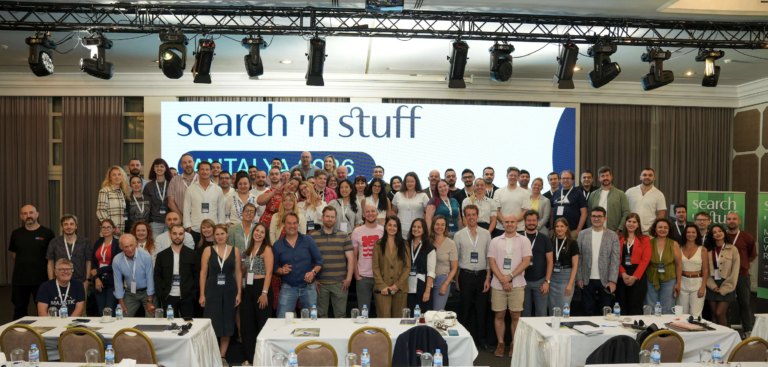
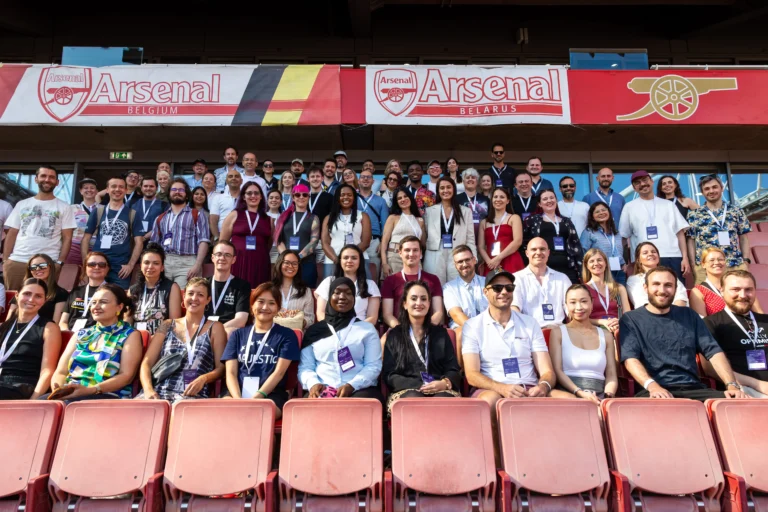
The easiest place to practise all of it is somewhere built for exactly this — long tables, real conversation, faces you’ll see again. Come and try it with us: at a Search ‘n Stuff meetup, at the London Conference 2026 at Emirates Stadium on 26 June, or across four days in Antalya this October. Bring an intention to be useful, follow up with the people you meet, and come back. That’s how every connection starts to count.